How to Sleep With Sciatica: Best Positions and Bedtime Tips (2026)
Disclosure: DailyWiser is reader-supported. If you buy through links on this page, we may earn a commission at no extra cost to you. Learn more.
Sciatica often feels worst at the end of the day. You finally lie down, and the ache in your lower back or buttock, or the burning and tingling down one leg, seems to get louder. Turning over wakes you up. By morning you are stiff, tired and sore, and poor sleep can make pain harder to cope with the next day.
The good news is that small changes to how you lie, what you lie on and what you do in the hour before bed can make nights more comfortable for many people. The NHS notes that sciatica usually gets better in a few weeks to a few months, although it can sometimes last longer. Its self-care advice includes carrying on with normal activities as much as possible and not sitting or lying down for long periods, which makes a comfortable, supported sleeping position all the more useful when you do rest.
This guide covers the sleeping positions most often suggested for sciatica, how to use pillows to support them, a simple bedtime routine, and when night pain means it is time to see a doctor. At the end we take a short, honest look at Sciaticyl, a supplement marketed for sciatic nerve comfort.
This is a research-based guide drawing on public health sources. We have not personally tested Sciaticyl; product details reflect its official sales page and our earlier Sciaticyl review.
Quick Takeaways
- Side-lying with a pillow between the knees, or back-lying with pillows under the knees, are the most commonly suggested positions.
- The goal is a neutral spine: hips, pelvis and lower back kept level rather than twisted or arched.
- Getting in and out of bed with a “log roll” can spare a sore back.
- No position, mattress or supplement cures sciatica. Night pain that is severe or getting worse needs a medical check.
Why sciatica can feel worse at night
Sciatica describes pain caused by irritation or compression of the sciatic nerve, which runs from the lower back through the buttock and down the back of each leg. According to Cleveland Clinic, a herniated (slipped) disc is the most common cause, with spinal narrowing (stenosis) and other conditions among the others.
At night, a few things can add up. Some positions twist the pelvis or arch the lower back and put more pressure on the irritated area. Lying still for hours can leave you stiff. And with fewer distractions, many people simply notice pain more. You cannot control all of this, but you can usually make your sleeping posture kinder to your back.
The best sleeping positions for sciatica
There is no single “correct” position for everyone. What helps depends on the cause of your sciatica and what your body tolerates, so treat the options below as experiments. Try one for a few nights and keep the ones that leave you less sore in the morning.
1. On your side with a pillow between your knees
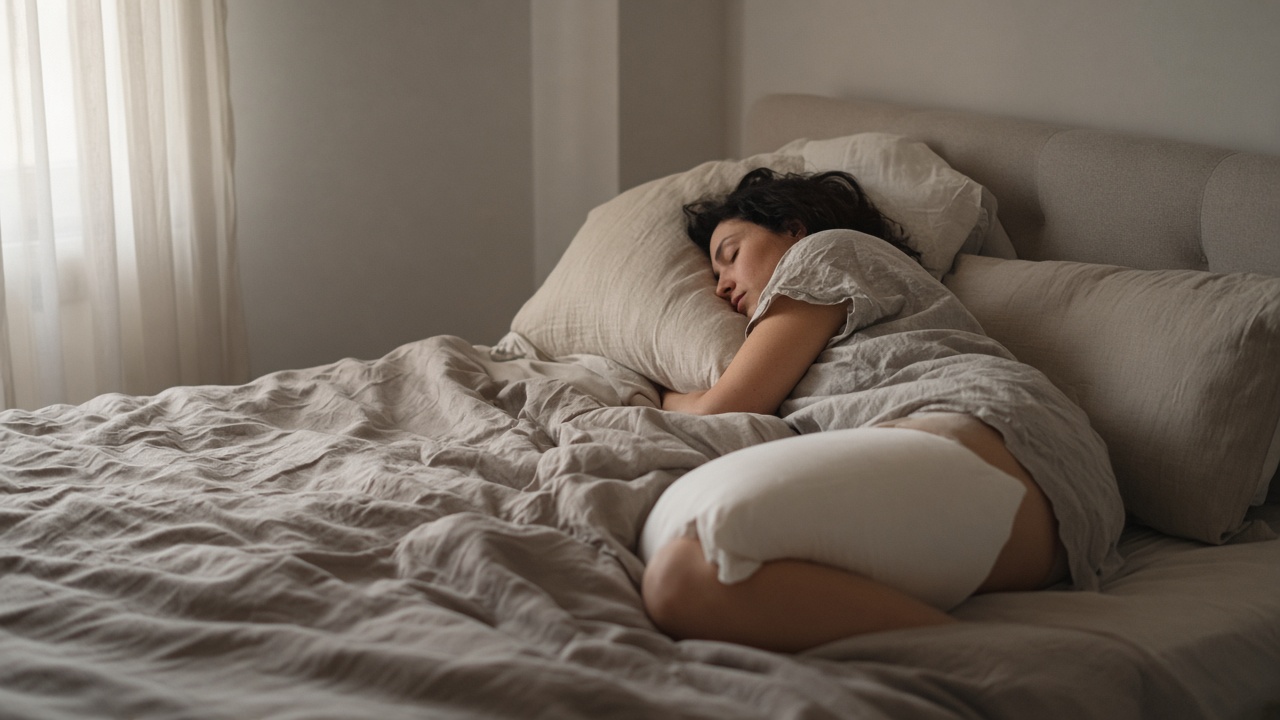
This is the position suggested most often. Lie on your side, usually with the painful leg on top, and bend your knees slightly. Place a firm pillow between your knees and, if it helps, between your ankles too. The pillow stops your top leg from dropping forward and twisting your pelvis and lower back.
Tip: a small rolled towel under your waist can help keep your spine level if there is a gap between your side and the mattress. Some people find lying on the painful side more comfortable instead, so test both.
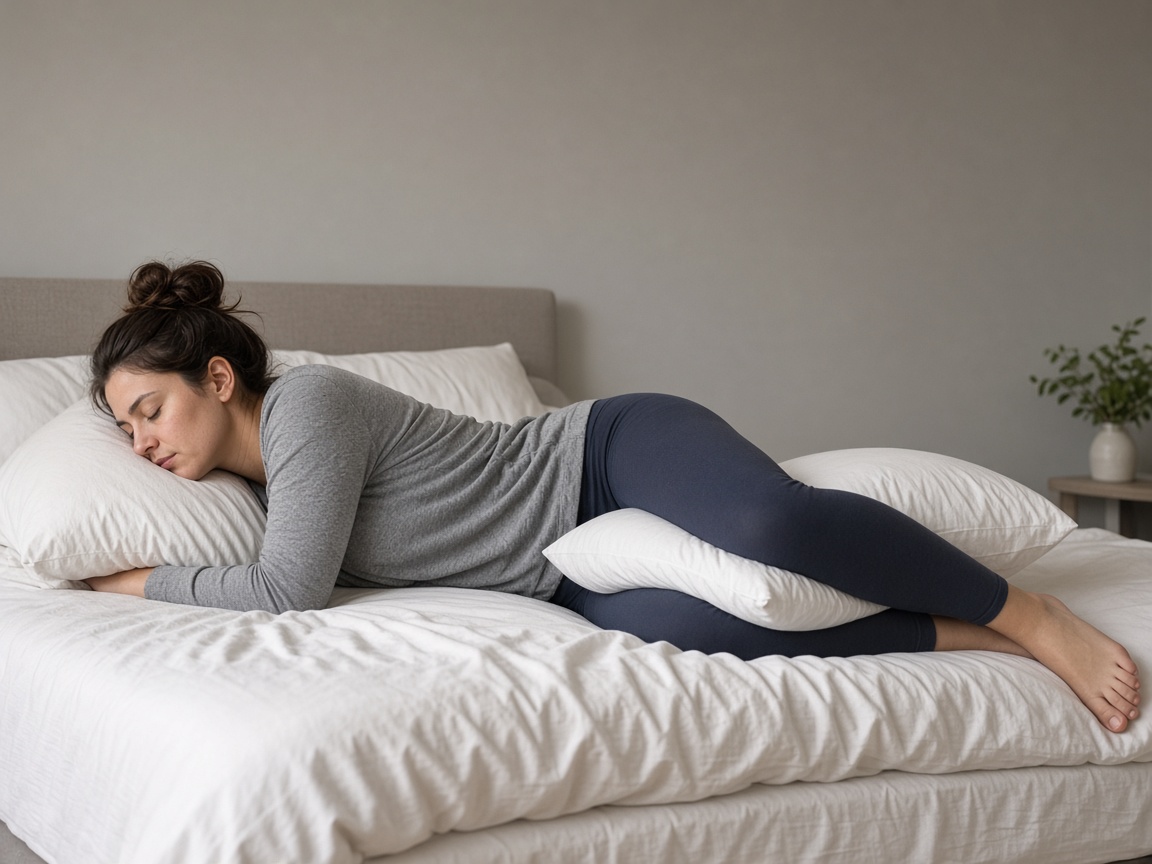
2. On your back with pillows under your knees
Lying on your back spreads your weight evenly and keeps the spine fairly neutral. Placing one or more pillows, or a wedge, under your knees bends your hips and knees slightly and can ease tension in the lower back. Use a head pillow that keeps your neck in line rather than pushing your chin toward your chest.
Tip: a thin rolled towel under the small of your back can add support if your lower back feels like it is sagging.
3. Curled on your side (fetal position)
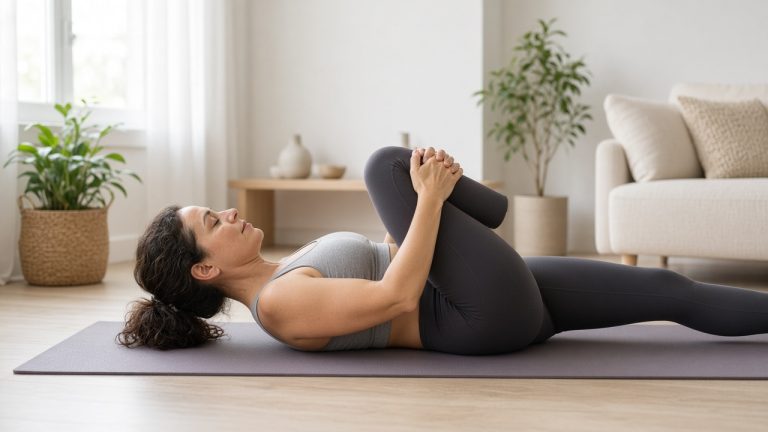
Some people, especially those whose pain comes from a herniated disc, find it more comfortable to lie on their side and draw their knees gently toward their chest. Others, including some people with spinal stenosis, find a more stretched-out position easier. Keep the curl relaxed rather than tight, and switch sides during the night if you can.
4. On your stomach with a pillow under your hips
Stomach sleeping is generally the least recommended position for back pain because it can arch the lower back and twist the neck. If it is the only way you can fall asleep, a thin pillow under your hips and lower stomach can reduce the arch. Use a very flat head pillow or none at all.
5. Reclined, with your upper body raised
A few people with sciatica sleep better partly reclined, using an adjustable bed, a wedge or a supportive recliner, with the knees slightly bent. If this is the only position you can tolerate for more than a few nights, mention it to your doctor, as it can be a clue to the cause of your pain.
Pillows, mattress and bed set-up
- Knee pillow: a firm pillow, or a contoured knee pillow, is the single most useful item for most side sleepers.
- Mattress firmness: a medium-firm mattress is often suggested for back pain. A mattress that sags lets your hips sink and your spine bend; if yours is old and dipped, a firm topper may be a cheaper test before replacing it.
- Head pillow height: side sleepers usually need a thicker pillow to fill the gap between shoulder and head; back sleepers a thinner one.
- Bed height and layout: keep a clear path to the bathroom and a light within reach, so you are not twisting or rushing in the dark.
How to get in and out of bed (the log roll)
Getting up can hurt more than lying down. Many physiotherapists teach a simple “log roll”. To get up: bend your knees, roll onto your side as one unit (shoulders and hips together), drop your legs over the edge of the bed, and push yourself up with your arms as your legs go down. To lie down, reverse the steps. Avoid sitting up straight from your back like a sit-up, and avoid twisting.
A simple bedtime routine for sciatica
- Move during the day. Staying as active as you comfortably can, with short walks and regular breaks from sitting, is one of the standard self-care steps for sciatica and may also help you feel ready to sleep.
- Gentle stretches before bed. A few minutes of mild stretches, if your clinician agrees, can ease stiffness. See our guide to sciatica stretches at home for options and safety cues.
- Heat or cold. A warm shower, or a heat or cold pack for 15 to 20 minutes, may take the edge off pain. Wrap packs in a towel and never fall asleep on a heat pad.
- Pain relief timing. If you use over-the-counter pain relief, ask a pharmacist which product is suitable for you and when to take it.
- Good sleep habits. Regular bed and wake times, a cool, dark room, and less caffeine and screen time late in the evening all support better sleep. The NHS sleep tips are a useful checklist.
- If you wake in pain: change position slowly, adjust your pillows, and try slow breathing before getting up. If you cannot settle after a while, get up briefly and do something calm in low light.
Watch: sleep tips for sciatica from a physical therapy clinic
In this short video, El Paso Manual Physical Therapy shares five tips for getting better sleep with sciatica. Watch it as background, and follow your own clinician’s advice where it differs.
When night pain means you should see a doctor
Sleep-friendly positions are self-care, not treatment. See your doctor if your pain is severe, lasts more than a few weeks, keeps coming back, is getting worse, or regularly stops you sleeping despite these changes. Pain that is worse at night and does not ease with any change of position, or that comes with fever, unexplained weight loss or a history of cancer, should be checked promptly. The red-flag symptoms in the box at the top of this page need urgent care.
A doctor or physiotherapist can look for the cause and discuss options such as a tailored exercise plan, prescription medication, injections or, in some cases, surgery. Mayo Clinic and the NIH (NIAMS) have clear overviews of back pain and sciatica, their causes and treatments.
Where Sciaticyl fits
Sciaticyl is a capsule supplement sold online for sciatic nerve comfort. On its official page, the vendor says to take two capsules a day and describes one bottle as a 30-day supply, priced at $69 when we checked. It says the formula combines 11 vitamins, minerals and herbs, but the page we reviewed did not list each ingredient and dose. The vendor describes a 90-day money-back guarantee and says it is a one-time purchase, not a subscription.
We found no published clinical trial of the finished product, and some of its marketing uses cure-style language we could not support. It will not change how you sleep or fix the cause of nerve pain. At most, it is an optional extra for adults who have already seen a doctor, are following the self-care basics above, and have had the full label checked by a pharmacist for interactions. For the full breakdown, read our Sciaticyl review.
- May suit: adults with a diagnosis who want to try a supplement alongside medical advice, within the refund window
- Skip if: you have red-flag symptoms, are pregnant or breastfeeding, take regular medication without advice, or expect a cure
Check Sciaticyl on the official site
Frequently asked questions
What is the best sleeping position for sciatica?
For many people it is side-lying with a firm pillow between the knees, or lying on the back with pillows under the knees. Both help keep the spine and pelvis level. The best position for you depends on the cause of your pain, so experiment and ask your physiotherapist.
Should I sleep on the painful side?
There is no fixed rule. Many people prefer the painful leg on top, but some find lying on it more comfortable. Go with the side that leaves you less sore in the morning.
Is sleeping on the floor good for sciatica?
Some people find a very firm surface helps for a night or two, but it is not a recommended long-term fix, and getting up from the floor can be hard with back pain. A medium-firm mattress or a firm topper is usually a better option.
Should I stay in bed if my sciatica is bad?
Generally no. Long periods of bed rest are not recommended for most sciatica. Staying gently active during the day, within comfort, tends to help recovery. Follow your doctor’s advice if it differs.
Can a supplement help me sleep with sciatica?
No supplement has been shown to cure sciatica or reliably fix night pain. Talk to your doctor about persistent night pain, and to a pharmacist before taking any supplement.
Bottom line
Sleeping with sciatica is often easier when you keep your spine neutral: a pillow between the knees on your side, pillows under the knees on your back, a supportive mattress, and a careful log roll in and out of bed. Pair that with gentle daytime movement and a calm bedtime routine. If night pain is severe, persistent or getting worse, see a doctor. A supplement such as Sciaticyl is optional at best and should only ever sit alongside, not instead of, proper care.
Affiliate disclosure: DailyWiser is reader-supported. If you buy through links on this page, we may earn a commission at no extra cost to you. This guide is based on research of publicly available information and is not paid for by vendors.
Similar Posts
7 Gentle Sciatica Stretches to Try at Home (and Where Sciaticyl Fits)
Seven gentle, commonly recommended sciatica stretches you can try at home, with simple safety cues, warning signs that need urgent care, and an honest look at where the Sciaticyl supplement fits.
How to Save Your Marriage When Only One Spouse Is Trying (8 Practical Steps)
Eight practical, research-informed steps for the spouse who still wants to try, the situations where self-help is the wrong tool, and an honest look at where the Save The Marriage program fits.
Pianoforall Review 2026: Is It Worth It for Beginners?
Pianoforall teaches piano through chords and rhythm styles. We cover what you get, the $49 price, the 60-day refund policy, pros and cons, and how it compares with apps and teachers.
Woodworking Tools for Beginners: A Starter List for a Small Shop (2026)
A practical starter list of woodworking tools for beginners working in a garage, shed or spare room: what to buy first, what can wait, and where the UltimateSmallShop guide fits.
Small Woodworking Shop Layout: 7 Space-Saving Ideas
Seven practical ideas for laying out a small woodworking shop in a garage, shed or basement, plus where the UltimateSmallShop planning guide fits.
How to Improve Memory Naturally: 9 Evidence-Based Habits (and Where MindVault Fits)
Nine evidence-based habits that support memory and brain health as you age, the warning signs that need a doctor, and an honest look at where the MindVault supplement fits.