Woodworking Tools for Beginners: A Starter List for a Small Shop (2026)
Disclosure: DailyWiser is reader-supported. If you buy through links on this page, we may earn a commission at no extra cost to you. Learn more.
Walk into any big-box hardware store and the tool aisle can make woodworking look like an expensive hobby. It does not have to be. Most beginner projects, such as a simple shelf, a planter box, a step stool or a workbench, can be built with a short list of reliable tools that fit in a corner of a garage, shed or spare room.
This guide lists the woodworking tools for beginners that are worth buying first, the ones that can wait until a project genuinely needs them, and the safety gear that should come before any of it. We also look briefly at UltimateSmallShop, a low-cost planning e-book sold through ClickBank that some beginners use as a checklist.
This is a research-based guide. We have not personally tested UltimateSmallShop; product details reflect its official sales page and our earlier UltimateSmallShop review.
Quick takeaways
- Buy safety gear first: eye, ear and lung protection.
- Start with measuring and marking tools, a saw, a drill/driver and clamps.
- Choose tools for your first real project, not for an imagined future shop.
- Big stationary machines can wait; a circular saw with a straight guide covers a lot of ground.
Step 1: Safety gear comes before any tool
Every woodworker, beginner or professional, needs three kinds of protection:
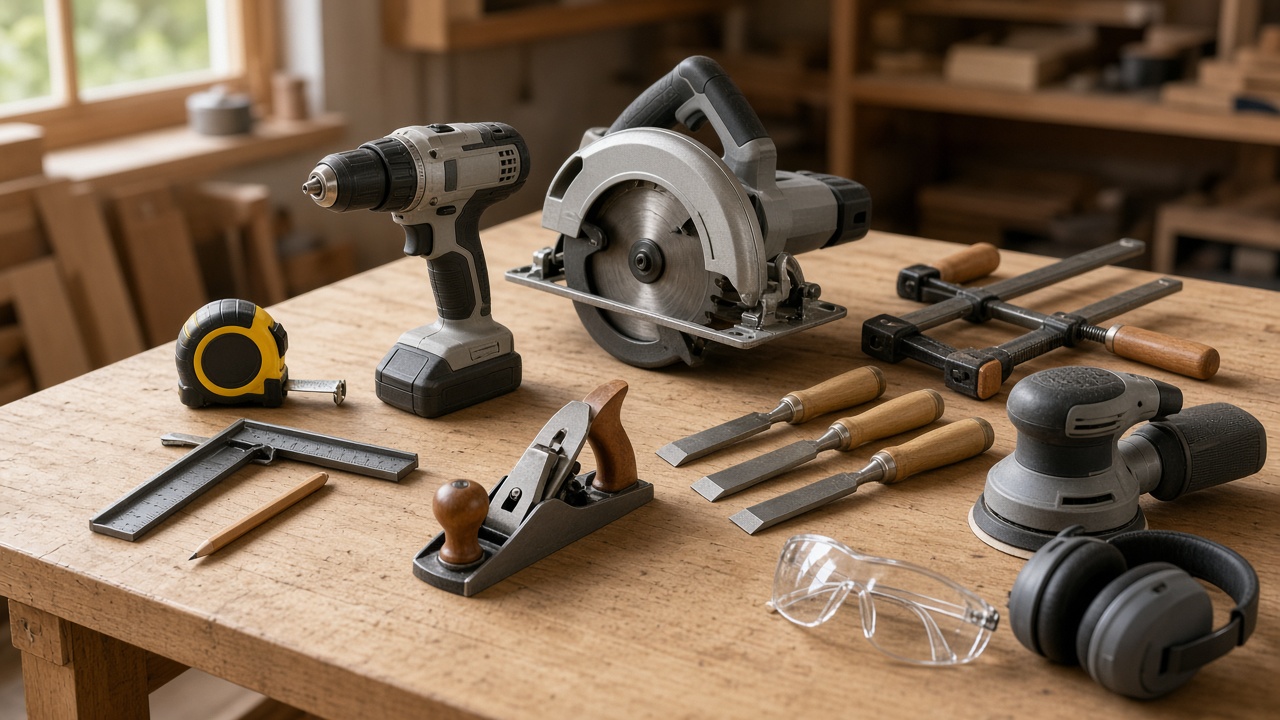
- Eye protection: impact-rated safety glasses or goggles with side protection.
- Hearing protection: earmuffs or earplugs rated for hearing protection. Routers, saws and planers are loud, and hearing damage builds up over time. The CDC’s NIOSH noise guidance explains why repeated exposure matters. Ordinary noise-cancelling headphones are not a substitute.
- Respiratory protection: a properly fitted dust mask or respirator, especially when sanding or cutting MDF. The OSHA wood dust page explains the health concerns linked to fine wood dust.
Add a basic first-aid kit and a push stick for any saw that needs one, and you have the foundation.
Step 2: Measuring and marking tools
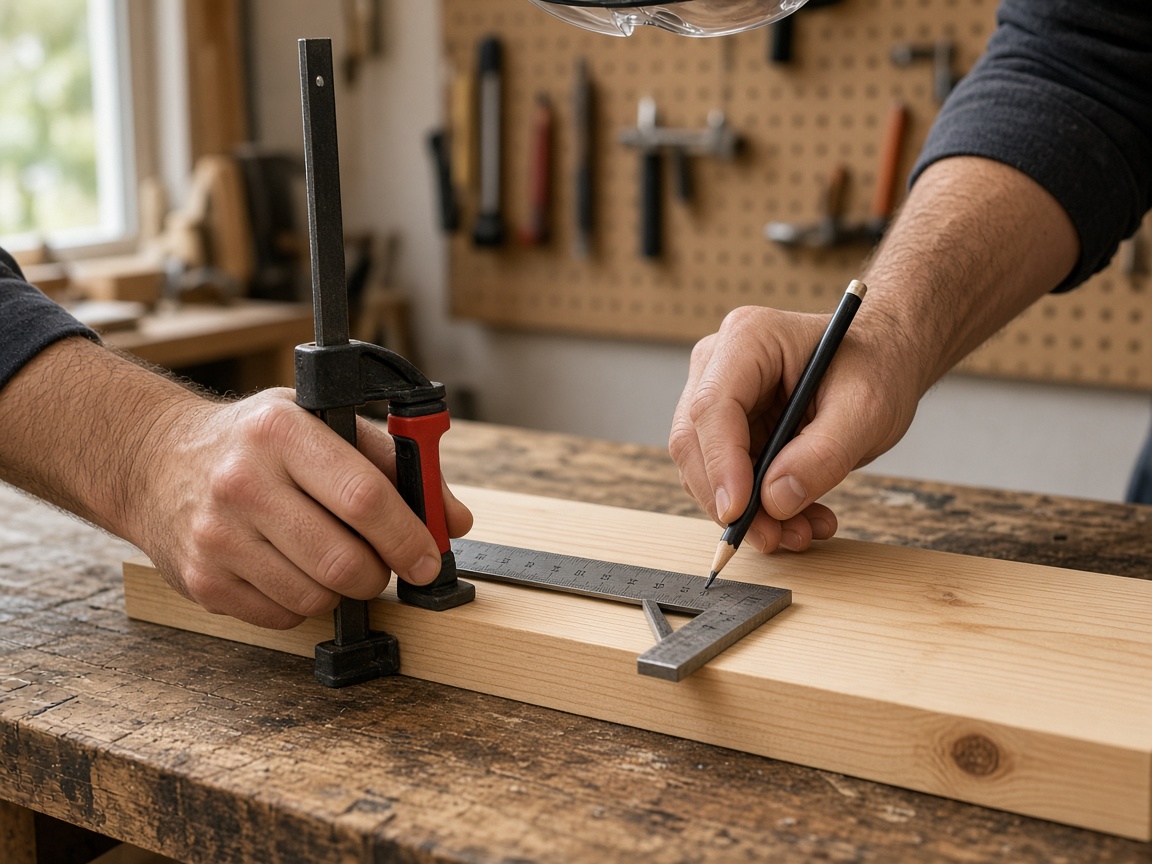
Accurate projects start with accurate layout. These are inexpensive and you will use them on every project:
- Tape measure (a 16 or 25 ft / 5 or 8 m tape is plenty).
- Combination square for marking square lines, checking 90 and 45 degree angles and setting depths.
- Sharp pencil or marking knife; a knife line gives a crisper reference for hand-tool work.
- Speed square (optional), handy as a quick guide for circular saw cuts.
Step 3: The core power tools
Cordless drill/driver
If you buy only one power tool, make it this. A drill/driver bores holes and drives screws, which covers the assembly stage of most beginner builds. Choosing one battery platform for future cordless tools can save money later.
Circular saw (with a straight guide)
A circular saw breaks down plywood and cuts boards to length, and it stores on a shelf. Paired with a clamped straightedge or an aftermarket guide rail, it can make straight, clean cuts that many beginners assume require a table saw. Read the manual, keep both hands on the saw, and support the work so the offcut does not pinch the blade.
Random orbit sander
Sanding by hand works, but a random orbit sander makes finishing much faster and less frustrating. Connect it to a shop vacuum where possible to reduce dust.
Optional: jigsaw
A jigsaw handles curves and cut-outs. It is useful, but not essential until a project calls for curved shapes.
Step 4: Clamps, a bench and a few hand tools
Woodworkers often say you can never have too many clamps, and beginners quickly learn why. Start with four bar or F-style clamps in a useful length, then add more as projects demand.
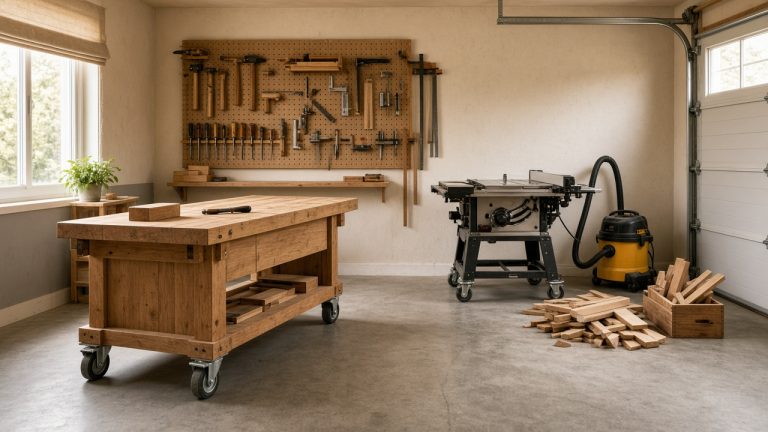
You also need a solid surface to work on. Many beginners build a simple workbench as their first project, using the drill and circular saw above. In a shared garage, putting it on locking casters lets it roll away when the car comes back; our small woodworking shop layout guide has more space-saving ideas.
A few hand tools round out the kit:
- A set of bench chisels (for example 1/4, 1/2 and 3/4 in or similar metric sizes) for cleaning up joints.
- A block plane for easing edges and trimming small amounts.
- A hand saw, such as a Japanese pull saw, for quick, precise cuts without power.
- A mallet or hammer, and a basic sharpening setup once your chisels need it.
What can wait
Table saws, routers, planers, jointers, band saws and dust-collection systems are excellent tools, but they are expensive, take up floor space and carry their own learning curve and safety demands. A good rule is to wait until you have a repeated, specific need that your current tools cannot meet. Many hobbyists build a lot of furniture before buying a single stationary machine.
A sensible way to budget
Prices vary widely by brand and country, so instead of quoting numbers that will change, we suggest splitting your first budget in this order: safety gear, measuring tools and clamps, then a drill/driver and circular saw, then a sander and hand tools. Buying a mid-range tool once is usually cheaper than buying a bargain tool twice, and used tools from reputable brands can be good value if you check them carefully.
Watch: the tools a beginner actually needs
In this video, Anika from Anika’s DIY Life walks through a beginner starter kit, starting with safety gear and building up to core power tools, and makes the same point: start small and add tools as projects require.
Where UltimateSmallShop fits
UltimateSmallShop is a downloadable e-book (about $29 on its official page when we last checked, with a 60-day refund guarantee handled through ClickBank) that covers tool selection, space planning, layout, electricity, dust and safety for a small home shop. It is aimed at true beginners. In our earlier research, several public reviewers described it as basic, so experienced woodworkers will likely learn little new.
If you would like one structured checklist before spending money on tools, it may save some research time. If you are comfortable piecing together free guides and videos like the one above, you may not need it. Prices and terms can change, so check the official page before buying.
Best for: first-time woodworkers planning a garage, shed or spare-room shop on a budget.
Skip if: you already have a working shop or want detailed project plans.
Check UltimateSmallShop on the official site
Frequently asked questions
What is the first woodworking tool a beginner should buy?
After safety gear, a cordless drill/driver is the most versatile first power tool, because almost every project involves drilling holes and driving screws.
Do I need a table saw to start woodworking?
No. A circular saw with a straight guide, plus a hand saw, can handle most beginner cuts. A table saw is worth considering later, once you understand its safety requirements and have room for it.
Should beginners start with hand tools or power tools?
Either works. Hand tools are quieter, cheaper and take less space; power tools are faster. Many hobbyists use a mix: power tools for rough cuts and hand tools for fitting and finishing.
How many clamps do I need?
Four is a practical starting point for small projects. You will likely add more as your projects get larger.
Can I do woodworking in an apartment or small space?
Yes, with hand tools, a portable bench and good dust control, though noise rules and dust make power-tool work harder. Check your lease or building rules first.
Bottom line
The best woodworking tools for beginners are the ones your first project actually needs. Protect your eyes, ears and lungs, buy good measuring tools and clamps, add a drill/driver and a circular saw, and let everything else wait until a real need appears. A planning guide like UltimateSmallShop can be a helpful beginner checklist, but the principles above cost nothing to apply.
Safety note: This article is general information, not professional safety training. Always follow your tool manufacturers’ instructions, keep guards in place, wear eye, ear and respiratory protection, and consult a licensed electrician for any wiring work.
Affiliate disclosure: DailyWiser is reader-supported. If you buy through links on this page, we may earn a commission at no extra cost to you. This does not affect our research or verdicts. Read our full disclaimer.